
Wednesday, February 25, 2026
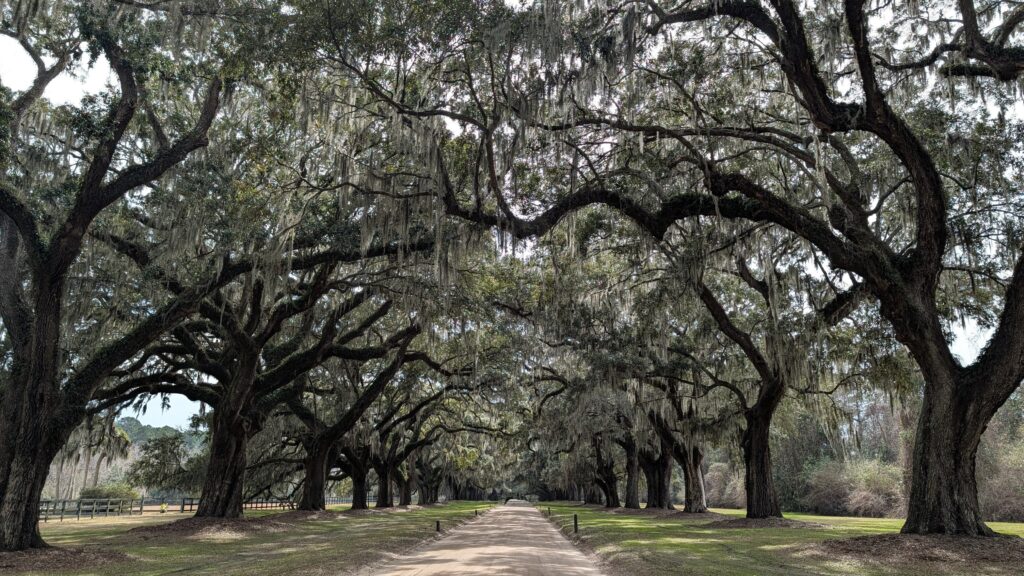
We visited Boone Hall Plantation on our way to Charleston today. It’s almost a two-hour drive from Myrtle Beach. We arrived and drove up the Avenue of Oaks. I read that it had such a place, but knowing and seeing are two very different things! WOW! Those trees (roughly 300 years old) are incredible. The avenue goes on for 3/4 of a mile and is just better than I can describe.
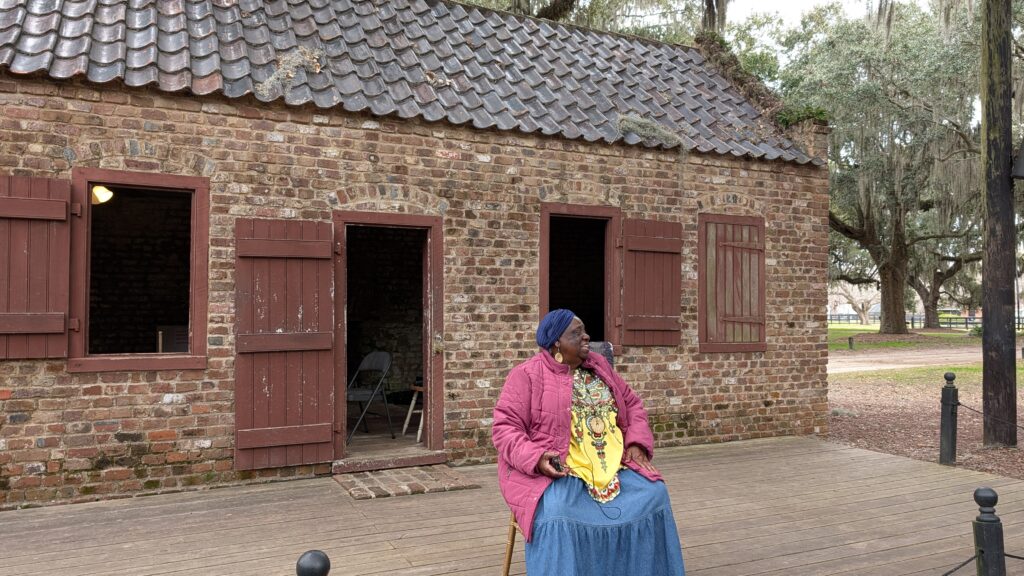
I chose this plantation to visit because it offered a program on the Gullah people of South Carolina. Originally from western Africa, these enslaved people lived on the barrier islands, away from the general population of the mainland. Their overseers directed their work, and they likely never saw anyone of a different race. Since they were from different tribes, they did not share a language. The Gullah language sprang from a mixture of their original languages and English. Veronica, a Gullah woman from Charleston, spoke it for us and it sounded like we should be able to listen carefully and understand her, but nope, not at all. It was beautiful to listen to.
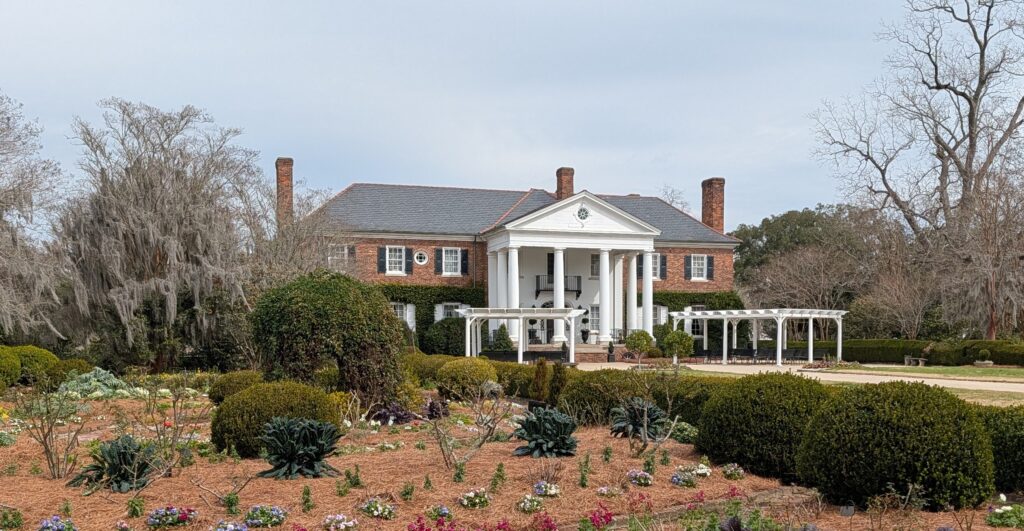
The Boones started the plantation in 1690 and it had quite a few owners over the past three centuries. Somehow, I found it unexpected that people bought and sold such large estates (4000 acres at most, 780 acres now). It started as an indigo exporter, then was successful with cotton, bricks, and pecans. One owner raised polo ponies. The most recent family bought in 1955. Their children did not have families, so there is only one person left. They have arranged for easements to follow the land in perpetuity so it will always stay a farm with the history maintained. Yay for those folks.
There were two log cabins to start, then a two story farmhouse. The current house wasn’t built until 1935, by a Canadian diplomat who had to leave in 1940 to diplomat World War II. Since the house is fairly new, it is very pretty and very livable.
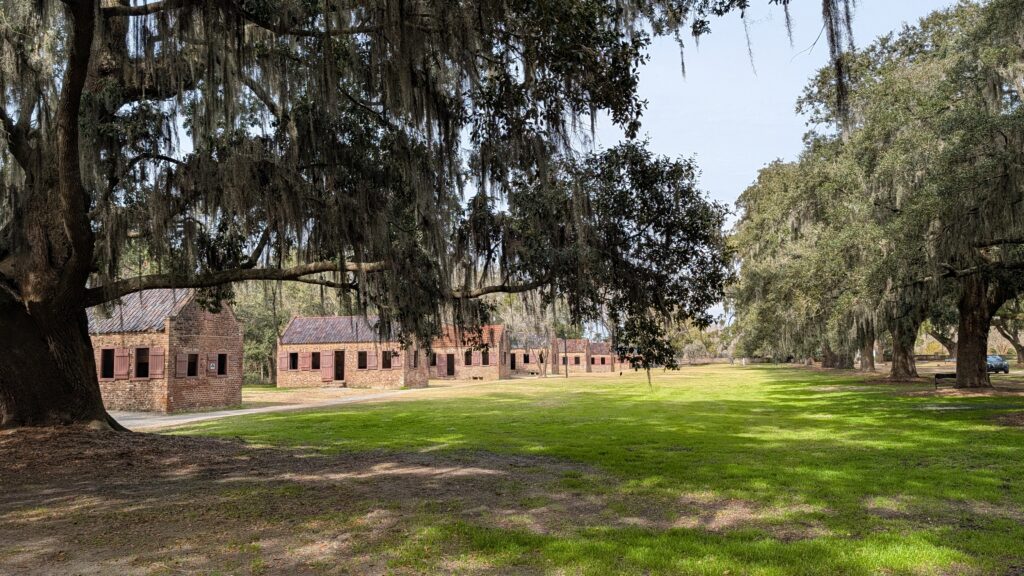
There are nine cabins left that enslaved people lived in. Since they are near the entrance (either Oak Avenue or by the boat dock) it is suspected that skilled enslaved people lived there and that the buildings were placed there to show off the owner’s wealth. Field hands and brick makers would have lived much farther from the house. The buildings have survived because they are made of brick – discarded “seconds” from the brick making done on the farm. They had to have floors, built up from the ground, because they are in a flood plain. They have each been turned into mini museums for different aspects of enslaved life. The plantation hosts many, many school groups and they really want to share those stories with the current young people. They said 10-15 people lived in each cabin, but the one that had furniture had one bed and looked like a decent sized living space. I would have liked 15 models filling the room, to give the correct mental image.
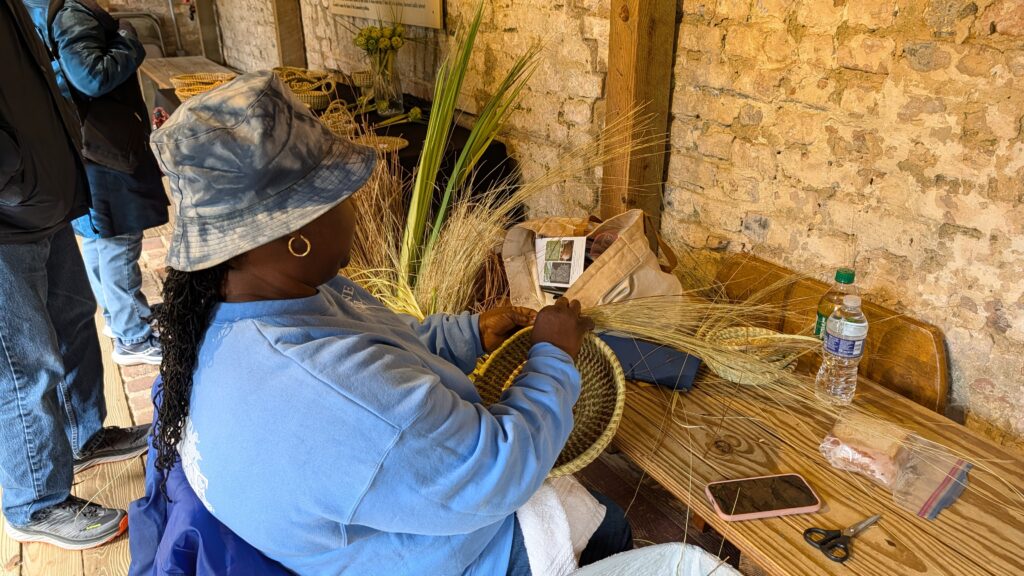
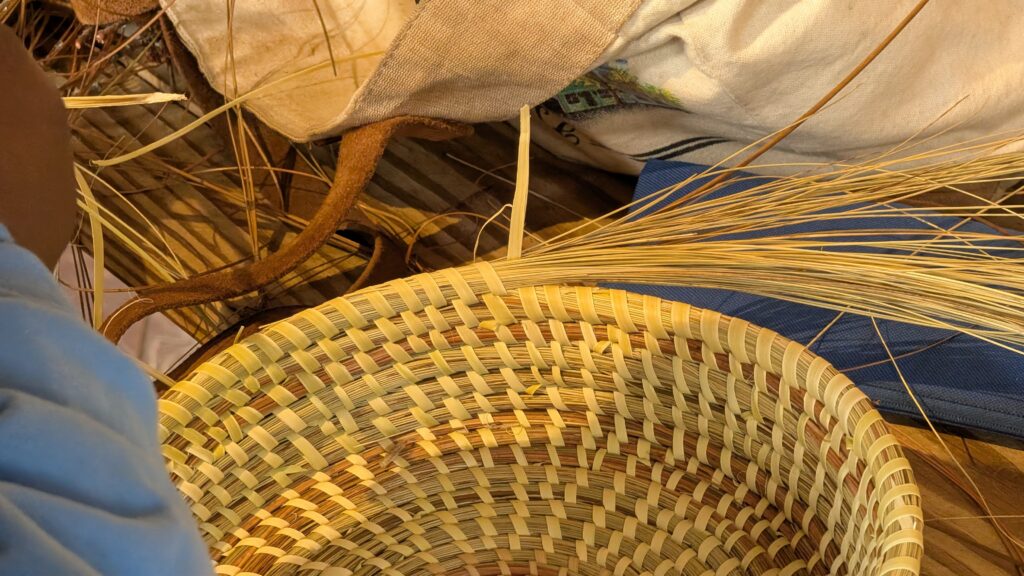
One of the cabins had a woman weaving baskets from sweet grass (and palmetto, and reeds, and something else). It was very interesting to watch.
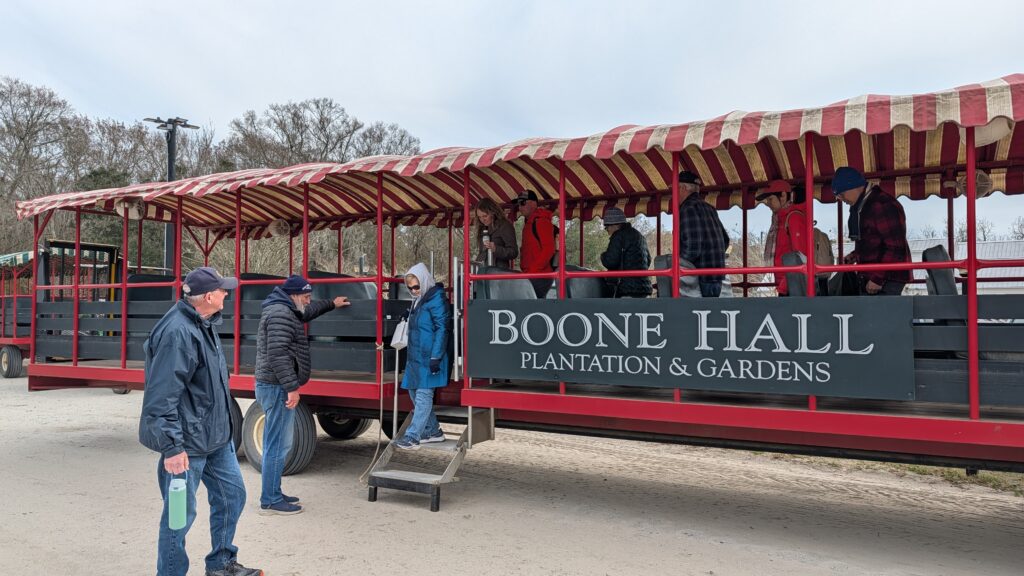
We rode the wagon all around the farm. Our guide is not a fan of kale or okra, but of all of the other 35 crops they raise. There are weddings and festivals throughout the year – 9000 people came for 55,000 pounds of oysters the first weekend of February. It sounds like quite a bash, but oysters? No, thank you. Halloween is a huge big deal. The kids love it, which the parents love. The kids have a great time and then go home, which our guide loves.
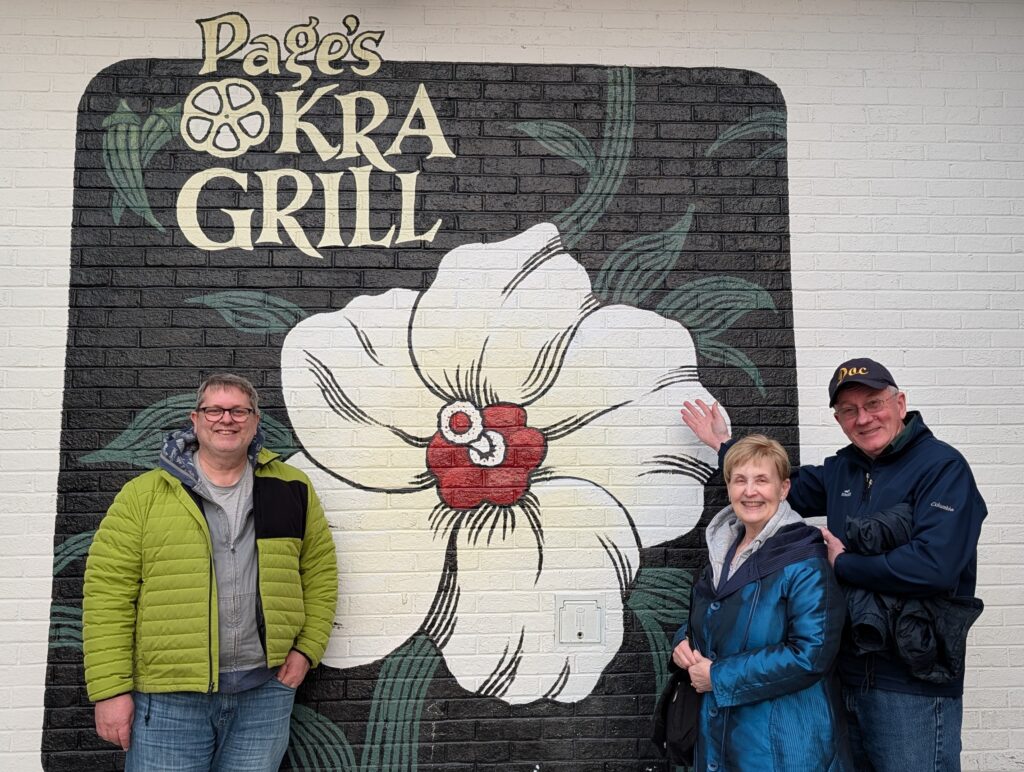
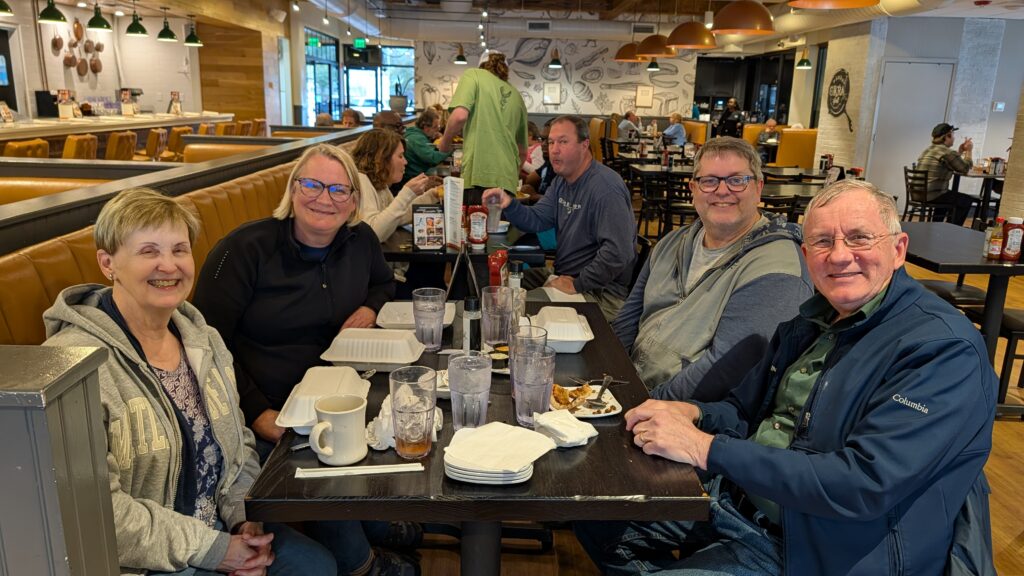
We went to Page’s Okra Grill for lunch/dinner. Jerry and Barbara were in heaven because they had several of their favorites on the menu. We started with fried okra – and it turns out we ALL love it. We ordered with reckless abandon – crab cakes, the best fried shrimp Jerry’s ever had, a hot chicken sandwich with pimento cheese and sweet chili sauce, pimento fries, pecan pie, beignets, and red velvet banana pudding. By the time we were finished eating, it was 4pm. I suggested we go home (and digest on the way) and go to Charleston tomorrow. Motion carried!
Our waitress took two pictures, back to back. We all look nearly identical in each picture, but the guy behind us is facing away in the other picture. I liked this one better.
The movie The Notebook was partially filmed at Boone Hall, so we watched it tonight while doing a little laundry. We really liked seeing the oaks and the house and the river and the roads from Boone Hall.